How to Buy High-Quality Backlinks: The Complete 2026 Guide
- Level: Beginner
- #Link Building
- #Off-Page SEO
- #Backlinks
- #Strategy

To buy high-quality backlinks, pay for contextual links inside relevant articles on sites with real organic traffic and a solid Domain Rating, then add them gradually with varied anchor text. Avoid networks, sitewide links and bulk packages. Done carefully, paid links can speed up rankings, though they remain a risk Google's policies warn about.
TL;DR
- A backlink is a link from another site to yours. Search engines use links to discover pages and gauge trust, and AI assistants tend to cite sources that are well linked and well mentioned.
- Quality means relevance, real organic traffic, sensible authority (DR 20+ as a floor) and in-content placement, not a high score alone.
- Google's spam policies treat links bought to manipulate rankings as a violation. You manage the risk with pace, variety and good sites. See is buying backlinks safe.
- Prices vary widely. A flat, per-link price from a vetted provider keeps cost predictable, and Contentor's starts at $49 per link.
- Measure with Google Search Console and give links weeks to months to show effects.
How to read this guide: if you are just starting, read through the pricing section and use the quality checklist. If you already work in SEO, jump to the sections on safety, pacing and measurement and to the reading map by level near the end. Terms such as DR, anchor text and nofollow are explained in the SEO, AEO and GEO glossary.
What are backlinks and why do they matter in 2026?
A backlink is a hyperlink on another website that points to one of your pages. Search engines have used links since the beginning to find pages and judge which ones other sites consider worth referencing. Moz's explanation of backlinks is a good primer if you want the fundamentals.
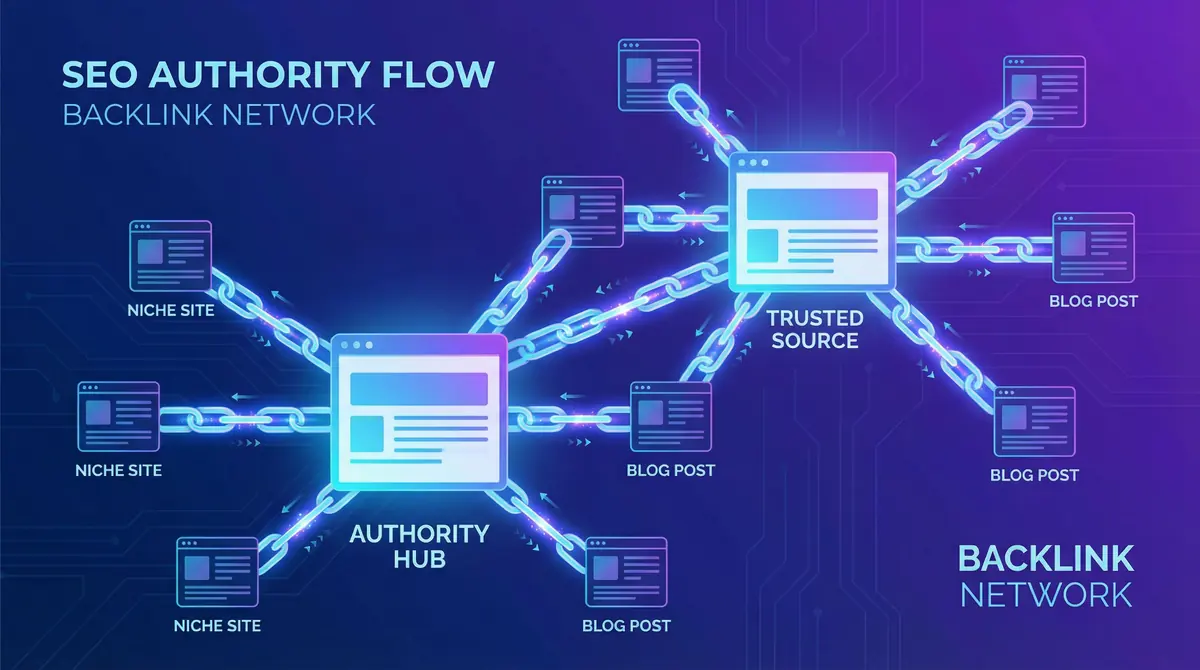
Think of backlinks as votes of confidence, with an important caveat: not all votes count equally. One link from a respected, relevant site in your field is worth far more than dozens from irrelevant or spammy pages. That distinction is the whole game when you buy.
In plain language: think of a backlink as a reference letter. A letter from someone respected in your field carries a lot of weight. A hundred letters from strangers who have never heard of you carry none, and they raise suspicion.
Are backlinks still a ranking factor?
Yes. Links remain one of the signals search engines use to discover and evaluate pages, which is why the market for link building still exists and why Google maintains policies against manipulating them. What has changed is the filtering: Google's systems are better at ignoring low-quality and artificial links, so quantity matters less than it once did.
Do backlinks help you show up in AI answers?
Indirectly, and it is worth being precise about that. Google AI Overviews, AI Mode, ChatGPT search and Perplexity retrieve sources from the web, and links and mentions on relevant sites make your pages easier to discover and more credible. No one can guarantee a citation. The strongest position is a page that is both well-linked and clearly written. We go deeper in SEO for AI search and generative engine optimization, and do backlinks help you appear in ChatGPT and other AI tools? covers what is known and what is not.
What is the difference between natural and paid backlinks?
| Natural (earned) | Paid (placed) | |
|---|---|---|
| How it happens | Someone links to your content on their own | You pay a publisher or provider to place a link |
| Speed | Slow and unpredictable | Faster and more predictable |
| Control | You cannot choose the anchor, page or timing | You choose the target page and often the anchor |
| Cost | Content and promotion effort | Direct payment, per link or per project |
| Policy risk | Lowest | Higher, because paid links that pass ranking signals violate Google's guidelines |
Natural links are the ideal, but most sites cannot rely on them alone. If you rely on paid links, treat them as one part of a mix that includes content worth linking to, digital PR and outreach.
Is it allowed to buy backlinks?
Not according to Google. Its spam policies classify buying or selling links that pass ranking credit as link spam, and its guidance asks that paid links be qualified, for example with rel="sponsored". Google's guide to qualifying outbound links explains the attributes.
In practice, millions of sites still buy placements, and the real-world risk depends on how you do it. The patterns that get sites into trouble are link networks, sitewide links, mass cheap packages and over-optimized anchors. Contextual links on real sites, added gradually, are a very different profile. We unpack the trade-offs in our guide to safe backlink buying, and you should read it before you spend.
One detail changes the conversation: the same policies say that buying and selling links for advertising and sponsorship is not a violation as long as the link is qualified with rel="sponsored" or rel="nofollow". What the policy targets is the paid link that passes ranking credit. Dofollow, nofollow, sponsored and UGC explains what each attribute does.
Updated October 2026: Google's spam policies page was last revised in August 2026, and Google's list of ranking updates shows spam updates in August 2025 and in March, June, August and September 2026 (the latest began on September 24). Google does not say which practices each one targets. For link spam updates specifically, its spam updates documentation warns that the ranking benefit from links its systems neutralize is lost and cannot be regained.
For SEO pros: the real trade-off is compliance versus direct effect. A link qualified with
sponsoredfollows the policy, but the documentation says links marked with these attributes will generally not be followed, so the gain comes from discovery, referral traffic and mentions rather than PageRank. A paid link without qualification aims at rankings and carries the policy risk. When links are neutralized, the loss is usually the money spent; manual actions tend to follow obvious patterns at volume. Monitor the Manual Actions report and the referring-domains chart, and log every purchase (source URL, target, anchor and date).
How do you tell if a backlink is high quality?
Do not buy blind. Before paying, check these five things. For the full list, see how to identify quality backlinks, and for a pre-payment review use the 20-point backlink buying checklist.
- Real organic traffic. Does the site get visitors from Google? A site with no traffic passes little value, whatever its authority score says.
- Authority. Look at DR (Ahrefs) and DA (Moz). DR 20+ is a sensible floor for new sites and DR 40+ suits competitive niches. Learn how to read the numbers in how to check DA and DR.
- Relevance. A pet-shop blog does not help a law firm. The linking page and site should relate to your topic.
- Placement. The link should sit inside editorial content, not in a footer, sidebar or auto-generated page.
- Neighborhood. Check what else the site links to. Casino, adult and pharma links beside yours are a red flag.

Where can you buy backlinks?
There are four main routes. None is universally best, and the right one depends on your budget, your time and how much control you need.
| Route | How it works | Pros | Cons |
|---|---|---|---|
| Link marketplaces | You browse sites and buy placements from site owners | Transparent per-site data, choose exact sites | Time spent filtering and vetting, quality varies by seller |
| Link building agencies | You hire a team to prospect and negotiate | Hands-off, professional expertise | Highest cost, often monthly retainers |
| DIY outreach | You email site owners and pitch collaborations | Lowest cash cost, real relationships | Very time-consuming, low response rates |
| Flat-price packages | You send a URL and anchor, the provider finds the sites | Predictable price, no negotiation, fixed timeline | You do not pick the exact site |
If you would like to see how the last route works, Contentor's backlink packages are an example: you choose a package, tell us the target page and anchor, and our team handles outreach and placement.
How much do backlinks cost?
Prices depend on authority, relevance, niche and the seller, and the spread is enormous. Mid-authority placements from independent sellers can cost anywhere from tens of dollars to a few hundred, while links on major news or industry publications cost far more and are often only available through PR. Treat any price that seems too good to be true, such as bulk bundles at a few cents per link, as a spam signal. Our backlink prices guide breaks down what drives cost.
For reference, here is Contentor's flat pricing for standard niches, paid once in USD:
| Package | Backlinks | Price | Per link |
|---|---|---|---|
| Starter | 1 | $49 | $49 |
| Basic | 3 | $147 | $49 |
| Standard | 5 | $245 | $49 |
| Premium | 10 | $490 | $49 |
Restricted niches such as gambling, adult and crypto cost three times as much, because fewer publishers accept them. There is no subscription, and each link is permanent.
What does a vetted backlink order look like?
Here is how an order works end to end at Contentor, which is also a good template for evaluating any provider.
- Choose a package and niche. Pick how many links you need and whether your topic is standard or restricted.
- Send your targets. For each link, give the page you want to rank and, if you like, the anchor text.
- Pay once. Checkout is by card through Stripe, in US dollars.
- Outreach and placement. Our team contacts publishers directly and places each link in a relevant article. Delivery takes 7 to 14 business days.
- Get the live URLs. Every placement is listed on your order page so you can verify it yourself.
Every link meets the same bar: DR 20+ on Ahrefs, real organic traffic, in-content placement, a permanent link, topical relevance and no duplicate articles within a package. If a link drops within six months of delivery, we replace it for free. We keep the list of publishers private so those sites are not flagged as sellers, which also means you cannot choose the exact site.
Whatever provider you evaluate, ask them the same questions: what is the minimum authority, do they require real traffic, are links permanent, and what happens if one disappears?
Standard niche or restricted niche: which are you?
Standard niches include technology, education, health and wellness, personal finance, home and garden, travel, fashion, sports, food and B2B services. Restricted niches include gambling, adult, crypto and forex, tobacco and CBD, supplements and similar regulated topics. The classification affects price and availability, so state your niche honestly when you order. A mismatch usually leads to rejected placements.
What should you check before paying for any backlink?
Run every offer through this pre-purchase checklist, whether it comes from a marketplace, an agency or a package provider. If you cannot answer yes to most of these, keep looking.
- Is the minimum authority stated (for example DR 20+), and can you verify it yourself?
- Does the site receive real organic traffic, and is that traffic stable or growing?
- Is the link placed inside editorial content that relates to your topic?
- Is the link permanent, and what happens if it is removed?
- Will you receive the live URLs so you can confirm each placement?
- Does the seller avoid promising rankings, traffic or timelines it cannot control?
- Can you set the target page and the anchor text?
A good provider is comfortable with these questions. A seller who dodges them is telling you something.
Is a paid backlink the same as a guest post?
Not exactly. A guest post is an article you write and publish on another site, usually with a link back to you. A paid placement can be a guest post or a link inserted into an existing article. Guest posts give you control over the message but cost writing and outreach time. For a side-by-side look at costs and trade-offs, read guest post vs. paid backlinks.
What are the red flags to avoid?
- Public blog networks (PBNs). Networks built to sell links are among the easiest for Google to detect and neutralize. See how PBNs work and what to do instead.
- Sitewide and footer links. They look artificial and add risk without adding value.
- Exact-match anchor overload. If most of your links say "cheap running shoes", the profile looks manufactured.
- Guaranteed rankings. Nobody controls Google's results.
- Bulk bundles at rock-bottom prices. Hundreds of links for a few dollars are spam by definition.
- No quality criteria. If a seller cannot tell you the minimum standards, assume there are none.
How many backlinks should you add, and how fast?
A sudden jump in links is a pattern. A steady build looks like normal growth. Use this as a sample ramp for a smaller site, not a rule:
| Month | Backlinks | Focus |
|---|---|---|
| 1 | 2 to 3 | Brand and your most useful pages |
| 2 | 3 to 5 | Supporting articles that feed your commercial pages |
| 3 | 5 to 8 | Commercial and conversion pages |
Adjust to the age of your site, the competition and how strong your content is. If you run a new site, our guide to link building for new sites lays out a safer six-month plan.
How should you choose anchor text and target pages?
Mix anchor types so the profile looks natural (the types, ratios and common mistakes are covered in anchor text: types, ratios and mistakes): your brand name, the bare URL, descriptive partial phrases and the occasional generic anchor, with exact-match keywords as a small minority. Do not point every link at your sales page. Include helpful articles, which are easier to earn links on naturally and then pass authority through your internal links to the pages that convert.
This is where content quality pays off. A link to a thin page wastes the placement, whereas a link to a thorough, well-structured article keeps working. If you need strong pages to link to, Contentor can help you generate SEO articles with AI, publish them to WordPress and track their results.
How do you measure whether bought backlinks worked?
Be patient and measure properly. Google has to crawl the pages that link to you and reassess your rankings, which typically takes a few weeks to a few months depending on competition and page quality. How long a backlink takes to work lays out realistic timelines.
- Record each placement: URL, date, anchor and target page.
- In Google Search Console (see the beginner's guide), track impressions, clicks and average position for the target page and its main queries.
- Compare against a similar page that did not receive links.
- Watch referral traffic from the linking pages.
- Review the Manual Actions report monthly.
Anyone who promises overnight results is overselling. To connect results to revenue, read how to measure backlink ROI.
What are common mistakes when buying backlinks?
- Buying links before the destination page is worth ranking.
- Using the same anchor repeatedly.
- Ignoring relevance in favor of a high score.
- Buying too many links too fast.
- Never checking whether the links are still live.
- Treating backlinks as a substitute for good content.
Reading map by level
This is the full map of the backlinks cluster. Pick the level that matches where you are and follow the order that makes sense for you.
If you are just starting
- What Are Backlinks and Why They Matter for SEO and AI Search: the starting point of the cluster, with the concept, the types of links and why they also matter in AI search.
- Dofollow, Nofollow, Sponsored and UGC Links: What Changes: what each
relattribute tells Google and which one to use on paid, sponsored and user-generated links. - How Many Backlinks Do I Need? Estimate It From Competitors: a method to estimate your link target by comparing your site with the pages already ranking.
- How Long Does a Backlink Take to Work?: realistic timelines, from Google crawling the link to a change in position, and how not to draw conclusions too early.
- Backlink Buying Checklist: 20 Points Before You Pay: 20 points to check before you pay, from the publishing site to what the provider has promised.
- Backlinks for Local Businesses: Where to Get Your First Links: where to find your first links close to home, in associations, partners, suppliers and local press.
- Free Backlink Checker Tools: What Each One Shows (2026): what each free tool shows, and what it leaves out, so you can audit links without paying.
- Is Buying Backlinks Safe? Risks, Google Penalties and Best Practices (2026): the real risks, the difference between a manual action and devaluation, and how to reduce your exposure.
- Backlink Prices in 2026: How Much Does a Backlink Cost?: what makes the price of a link go up or down and how to work out the return with your own numbers.
- Link Building for New Sites: A Safe 6-Month Plan (2026): a six-month plan for anyone starting from zero.
To go deeper
- How to Identify Quality Backlinks: 10 Metrics and Checks That Matter: ten checks to approve or reject a site before accepting the link, with a five-minute test.
- How to Check Backlink DA and DR Before You Buy (2026 Tutorial): how to read DA and DR side by side and cross-check them with traffic and link history.
- Guest Post vs Paid Backlinks: Which Link Building Strategy Should You Choose?: cost, control and risk of each approach, side by side.
- Anchor Text: Types, Ratios and Common Mistakes: the types of anchor text, reference ratios and the most common mistakes.
- Do Backlinks Help You Appear in ChatGPT and Other AI Tools?: what is known, and what nobody knows yet, about links and citations in AI answers.
- How to Analyze Competitor Backlinks (Link Gap Analysis): how to find the sites that link to your competitors but not yet to you.
- 10 Questions to Ask Your Backlink Provider Before You Pay: a list of questions to tell a serious provider from a seller of promises.
- PBNs (Private Blog Networks): How They Work, Risks and Alternatives: how private blog networks work, why Google fights them and what to do instead.
- Guest Post Outreach That Works (3 Email Templates): how to approach editors and bloggers, with email templates ready to adapt.
- Unlinked Brand Mentions: Value and How to Turn Them Into Links: how to turn the mentions of your brand that already exist on the web into links.
- Ecommerce Backlinks: Which Pages to Link and Where to Get Links: which store pages should receive links (categories, products, guides) and where to get each one.
- SaaS and B2B Backlinks: A Strategy Beyond Guest Posts: a link strategy for software and B2B that goes beyond guest posts.
- Backlinks for Clinics and Law Firms: What Is Safe and Ethical: what is safe and ethical in YMYL fields, where trust weighs even more.
- Backlinks from News Portals: Are They Worth the Investment?: when a link on a news portal is worth the cost and how to earn one without buying.
- Natural Backlink Profile: What It Looks Like and How to Keep Yours Healthy: what a healthy link profile looks like and how to keep it that way over time.
- Backlinks from Brazilian Sites to Rank in Portuguese: how to enter the Portuguese-language market with links from Brazilian sites.
For specialists
- Link Spam Penalty and Disavow: When and How to Act: when and how to act on a manual action or toxic links, including how to use disavow.
- Digital PR for Link Building: How to Earn Links from Publications and Blogs: how to earn links from publications and blogs with story angles, data and relationships.
- Broken Link Building: Step-by-Step Guide to Earn Links: the step-by-step method to earn links from other sites' broken pages.
- Linkable Assets: What to Create to Earn Backlinks Naturally: what to create (data, tools, reference guides) to attract links without asking.
- How to Measure Backlink ROI (Without Vanity Metrics): how to measure the return of a batch of links without being fooled by vanity metrics.
FAQ
Is buying backlinks worth it?
It can be, especially when you already have strong pages that are stuck on page two and need authority signals. The value depends on link quality, relevance and pace, and results are never guaranteed. Combine paid links with good content and track results in Search Console.
How much does it cost to buy a backlink?
It varies widely with authority, niche and seller. At Contentor, permanent in-content links on vetted DR 20+ sites cost $49 per link in standard niches and $147 in restricted niches, with packages of 1, 3, 5 or 10 links paid once. Be wary of bulk offers priced at a few cents per link.
Is it safe to buy backlinks?
It carries risk, because Google's spam policies treat links bought to manipulate rankings as a violation. You reduce the risk by choosing relevant sites with real traffic, adding links gradually, varying anchors and avoiding networks and sitewide placements. Read our safety guide first.
How long do backlinks take to work?
Usually weeks to months. Google needs to crawl the linking pages and reassess your rankings, and the outcome depends on your competition and the quality of the target page. Be skeptical of promises of immediate results.
Do backlinks help with ChatGPT and Google AI answers?
Indirectly. Links and mentions on relevant sites make your pages more discoverable and credible, and AI search systems use web sources to answer. Citations are never guaranteed, so pair backlinks with clear, source-worthy content.
Can I choose which sites link to me?
With marketplaces and DIY outreach, yes. With flat-price packages such as Contentor's, no: the publisher list stays private so the sites are not flagged as link sellers, but every site meets the same minimums for DR, traffic and topical relevance.
Ready to build authority?
If you want predictable pricing and a vetted process, you can buy backlinks from Contentor: permanent, in-content links on DR 20+ sites with real organic traffic, delivered in 7 to 14 business days and backed by free replacement for six months. To give those links something strong to point at, Contentor helps you generate SEO articles with AI, publish them to WordPress and track their performance in Google Search Console.
Read next:
- 10 questions to ask your backlink provider before you pay: a script to compare any offer.
- How many backlinks do I need?: estimate your target from the competition.
- Natural backlink profile: how to keep your profile healthy over time.
- Link spam penalty and disavow: the plan for when something goes wrong (advanced).
Strengthen your authority for AI Search
Combine source-worthy content with contextual backlinks on vetted sites to reinforce trust, discovery, and topical authority.
View contextual backlinksPrepare your content for AI answers
Create AEO/GEO briefs, entities, schema, and structured articles for Google AI Overviews, AI Mode, and traditional SEO.
Try Contentor free